Documents
Battery MSDS: CR2032 Lithium Button Cell in the ZXTLCD-AIS007
Full GHS Material Safety Data Sheet for the CR2032 lithium button cell in the ZXTLCD-AIS007, issued by PONY Testing: 16 sections, transport class and handling rules.
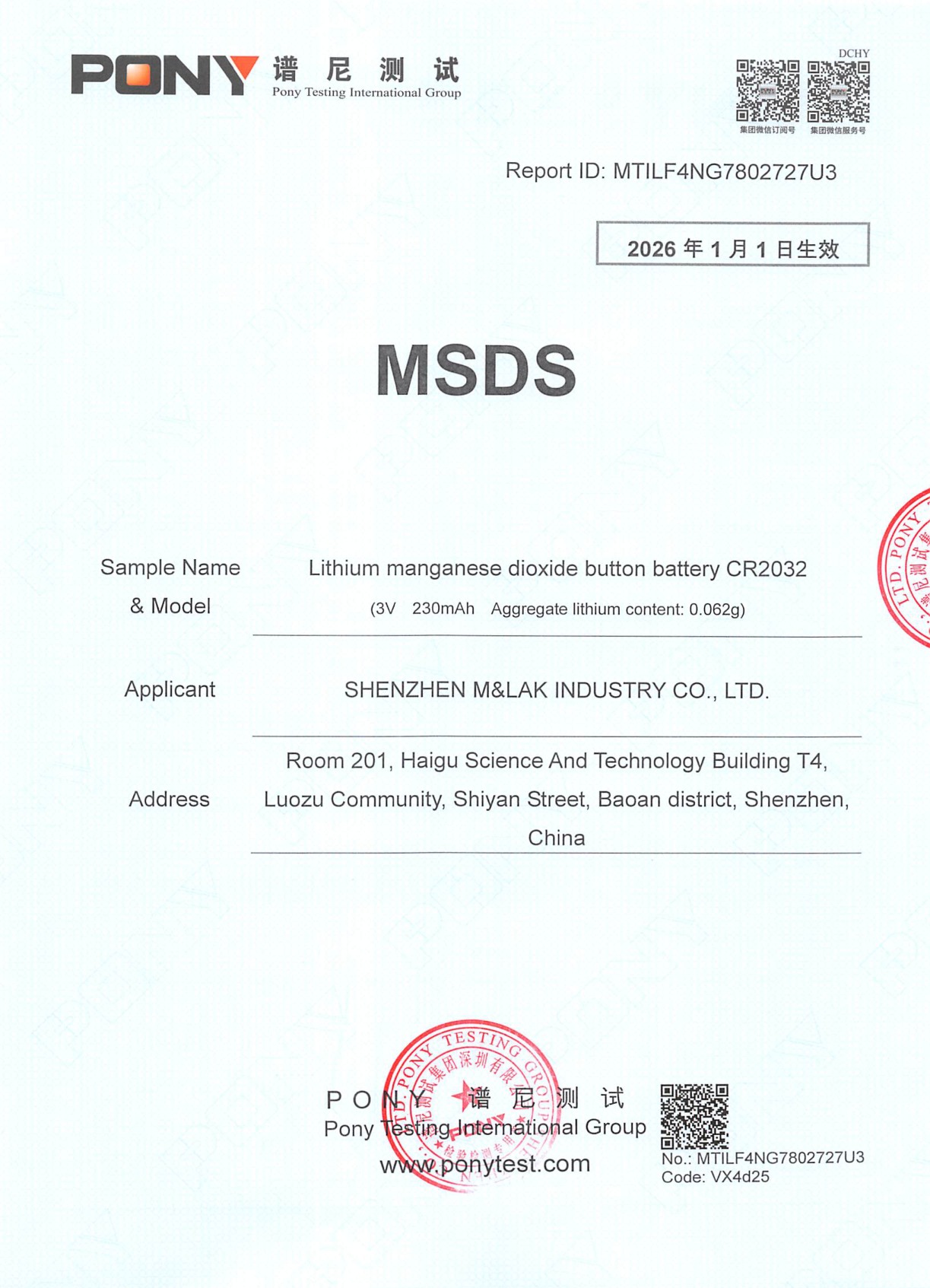
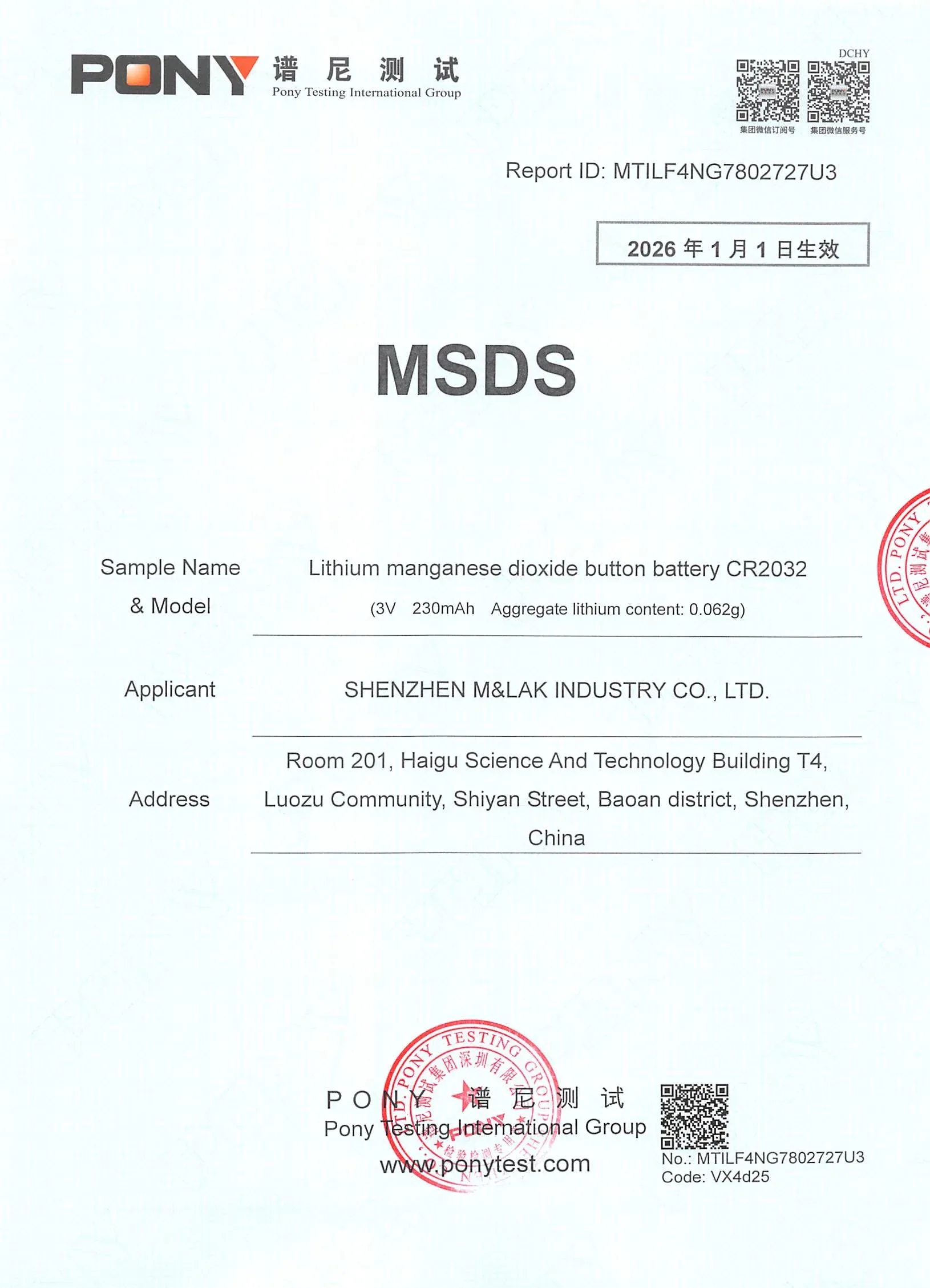
The ZXTLCD-AIS007 contains a CR2032 lithium manganese dioxide button cell. Shipping lithium batteries requires paperwork, so the cell carries its own Material Safety Data Sheet (MSDS) issued by PONY Testing International Group against the GHS reference ST/SG/AC.10/30/Rev.11.
Document details — Report No. MTILF4NG7802727U3, issued 2025-12-05, effective 1 January 2026, 10 pages. Sample: lithium manganese dioxide button battery, model CR2032, 3 V, 230 mAh, aggregate lithium content 0.062 g. Applicant: SHENZHEN M&LAK INDUSTRY CO., LTD. Supplier on the sheet: SHENZHEN LIDEA BATTERY CO., LTD.
Contents of this document
1. Chemical product and company identification
2. Hazards identification
3. Composition and information on ingredients
4. First aid measures
5. Fire fighting measures
6. Accidental release measures
7. Handling and storage
8. Exposure controls and personal protection
9. Physical and chemical properties
10. Stability and reactivity
11. Toxicological information
12. Ecological information
13. Disposal considerations
14. Transport information
15. Regulatory information
16. Other information
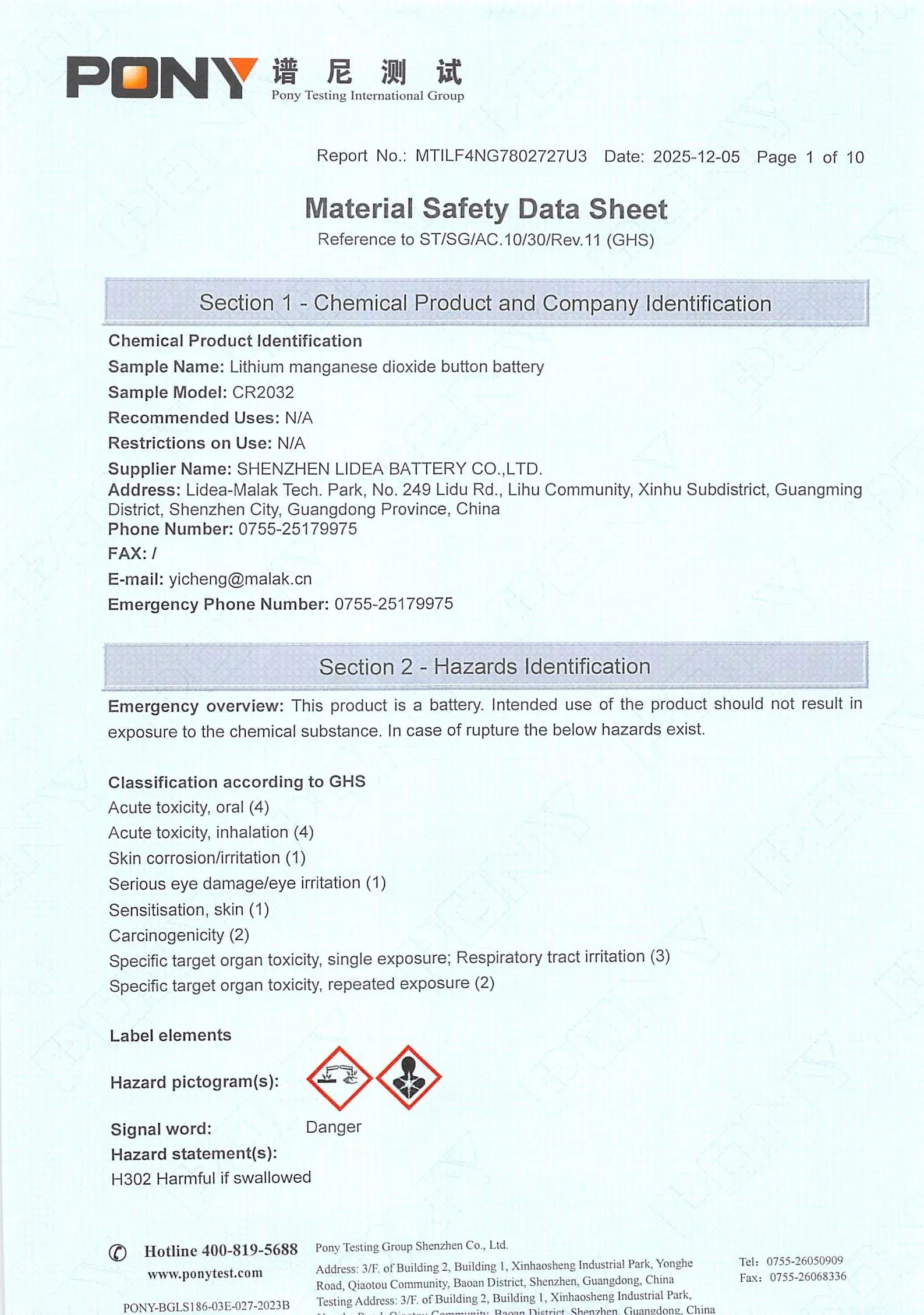
1. Chemical product and company identification
Sample name: lithium manganese dioxide button battery. Sample model: CR2032. Recommended uses and restrictions on use: not applicable.
Supplier: SHENZHEN LIDEA BATTERY CO., LTD., Lidea-Malak Tech. Park, No. 249 Lidu Rd., Lihu Community, Xinhua Subdistrict, Guangming District, Shenzhen City, Guangdong Province, China. Phone 0755-25179975. Emergency phone 0755-25179975. E-mail yicheng@malak.cn.
2. Hazards identification
Emergency overview: this product is a battery. Intended use should not result in exposure to the chemical substance. In case of rupture the hazards below exist.
Classification according to GHS: acute toxicity, oral (4); acute toxicity, inhalation (4); skin corrosion/irritation (1); serious eye damage/eye irritation (1); sensitisation, skin (1); carcinogenicity (2); specific target organ toxicity, single exposure — respiratory tract irritation (3); specific target organ toxicity, repeated exposure (2).
Hazard pictograms: corrosion and health hazard. Signal word: Danger.
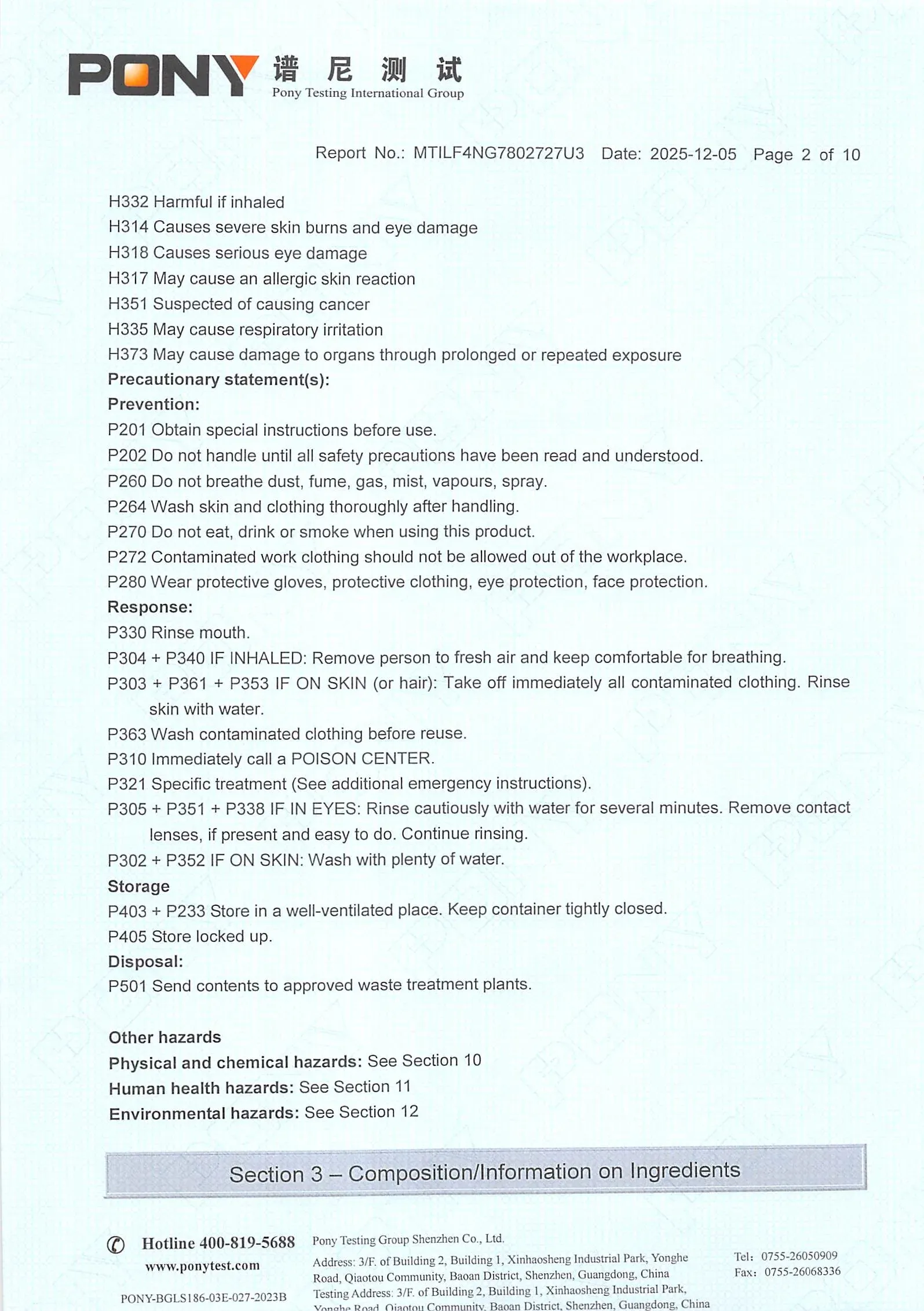
Hazard statements: H302 harmful if swallowed; H332 harmful if inhaled; H314 causes severe skin burns and eye damage; H318 causes serious eye damage; H317 may cause an allergic skin reaction; H351 suspected of causing cancer; H335 may cause respiratory irritation; H373 may cause damage to organs through prolonged or repeated exposure.
Precautionary statements (prevention): P201 obtain special instructions before use; P202 do not handle until all safety precautions have been read and understood; P260 do not breathe dust, fume, gas, mist, vapours, spray; P264 wash skin and clothing thoroughly after handling; P270 do not eat, drink or smoke when using this product; P272 contaminated work clothing should not be allowed out of the workplace; P280 wear protective gloves, protective clothing, eye protection, face protection.
Precautionary statements (response): P330 rinse mouth; P304+P340 if inhaled, remove person to fresh air and keep comfortable for breathing; P303+P361+P353 if on skin or hair, take off immediately all contaminated clothing and rinse skin with water; P363 wash contaminated clothing before reuse; P310 immediately call a poison centre; P321 specific treatment; P305+P351+P338 if in eyes, rinse cautiously with water for several minutes, remove contact lenses if present and easy to do, continue rinsing; P302+P352 if on skin, wash with plenty of water.
Storage: P403+P233 store in a well-ventilated place, keep container tightly closed; P405 store locked up. Disposal: P501 send contents to approved waste treatment plants.
3. Composition and information on ingredients
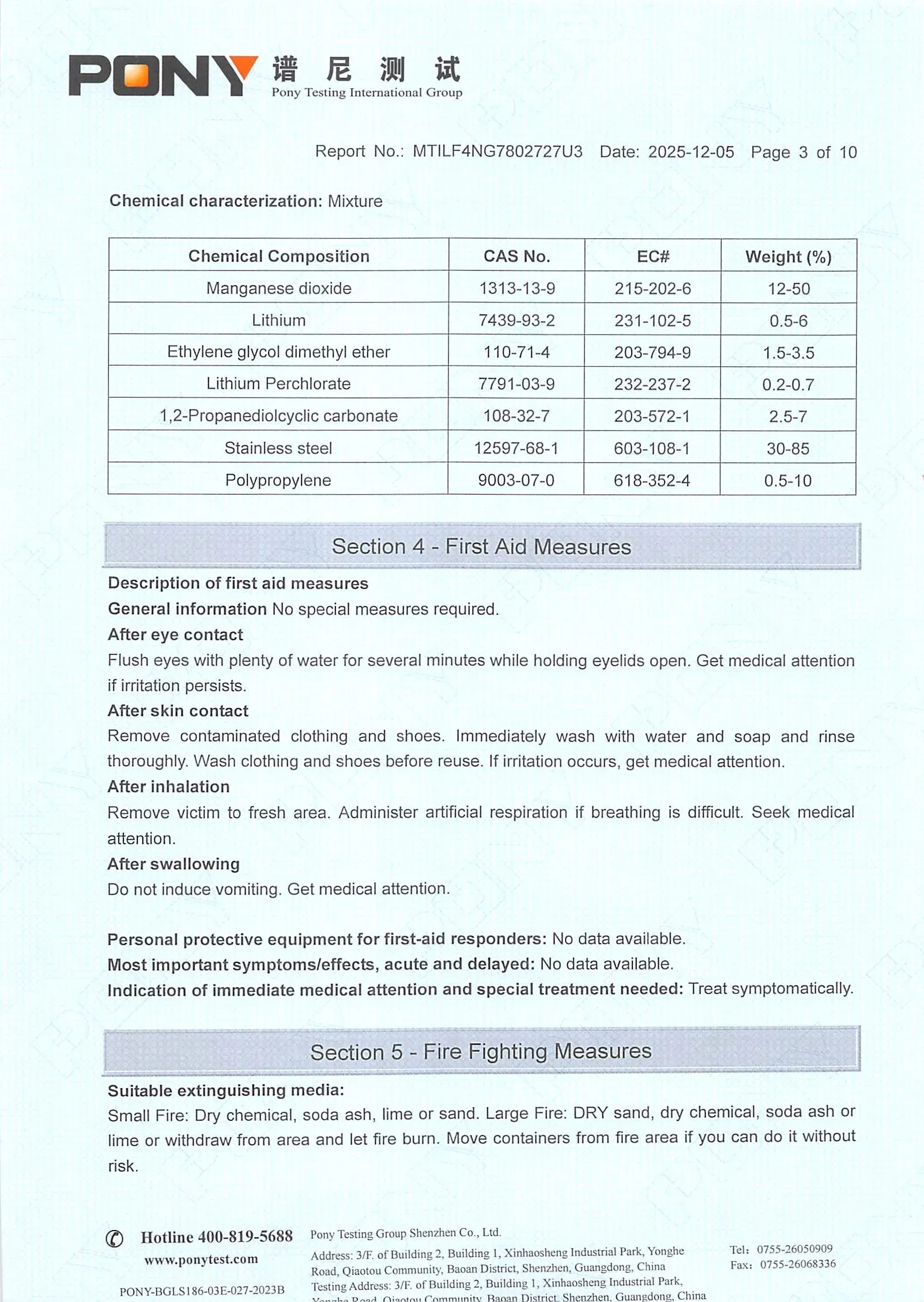
Chemical characterisation: mixture. Manganese dioxide (CAS 1313-13-9), 12-50%. Lithium (CAS 7439-93-2), 0.5-6%. Ethylene glycol dimethyl ether (CAS 110-71-4), 1.5-3.5%. Lithium perchlorate (CAS 7791-03-9), 0.2-0.7%. 1,2-Propanediolcyclic carbonate (CAS 108-32-7), 2.5-7%. Stainless steel (CAS 12597-68-1), 30-85%. Polypropylene (CAS 9003-07-0), 0.5-10%.
4. First aid measures
General information: no special measures required. After eye contact, flush eyes with plenty of water for several minutes while holding eyelids open and get medical attention if irritation persists. After skin contact, remove contaminated clothing and shoes, wash immediately with water and soap and rinse thoroughly; if irritation occurs get medical attention. After inhalation, remove the person to a fresh area and administer artificial respiration if breathing is difficult. After swallowing, do not induce vomiting and get medical attention. Treat symptomatically.
5. Fire fighting measures
Suitable extinguishing media: for a small fire use dry chemical, soda ash, lime or sand. For a large fire use dry sand, dry chemical, soda ash or lime, or withdraw from the area and let the fire burn; move containers from the fire area if this can be done without risk. Unsuitable media: water or foam.
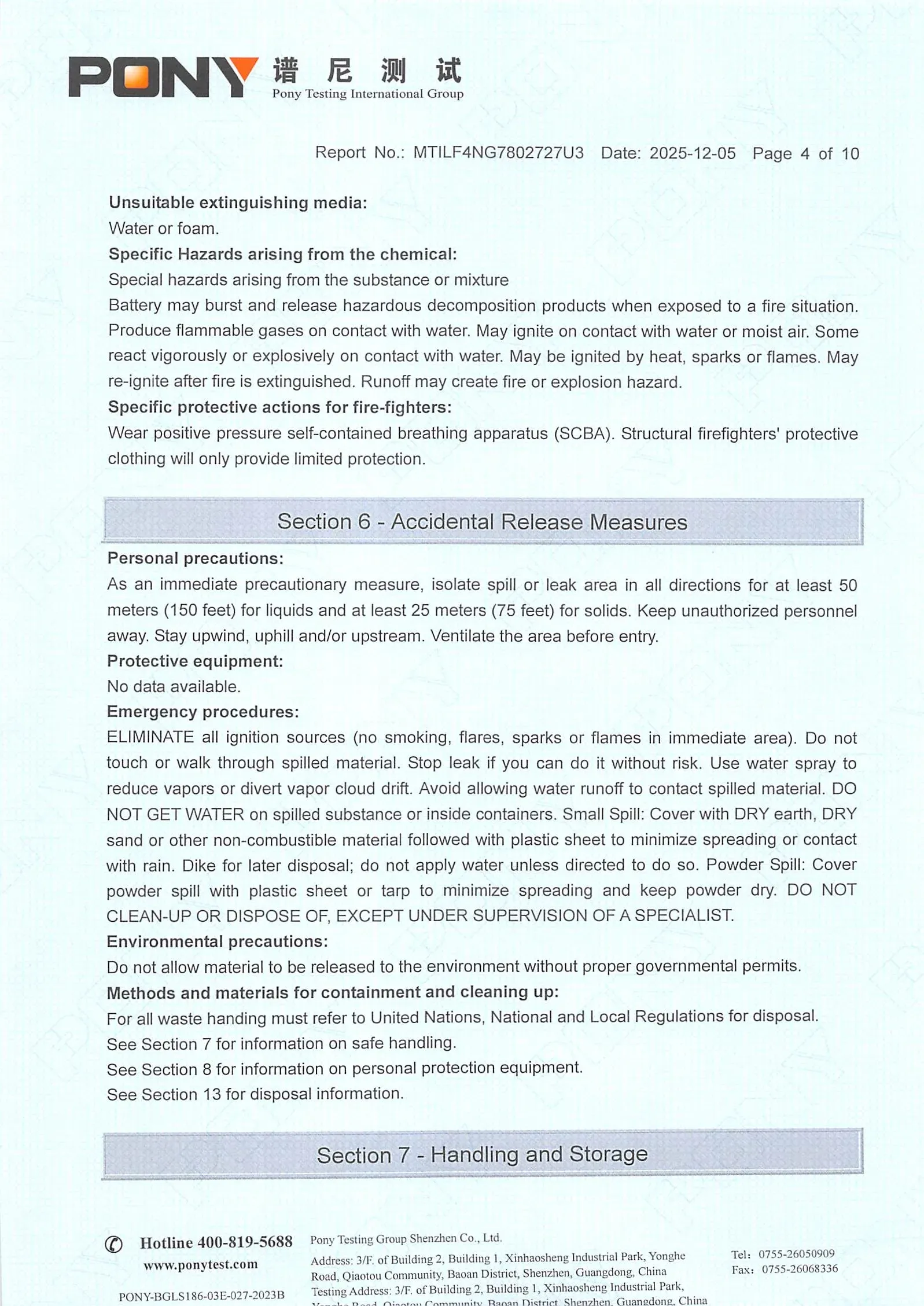
Specific hazards: a battery may burst and release hazardous decomposition products when exposed to fire; it can produce flammable gases on contact with water and may ignite on contact with water or moist air; some react vigorously or explosively with water. Fire-fighters should wear positive pressure self-contained breathing apparatus; structural firefighters' protective clothing provides only limited protection.
6. Accidental release measures
Isolate the spill or leak area in all directions for at least 50 metres for liquids and at least 25 metres for solids, keep unauthorised personnel away, stay upwind and ventilate the area before entry. Eliminate all ignition sources. Do not touch or walk through spilled material. Small spill: cover with dry earth, dry sand or other non-combustible material followed with a plastic sheet; do not apply water unless directed. Do not clean up or dispose of the material except under the supervision of a specialist.
7. Handling and storage
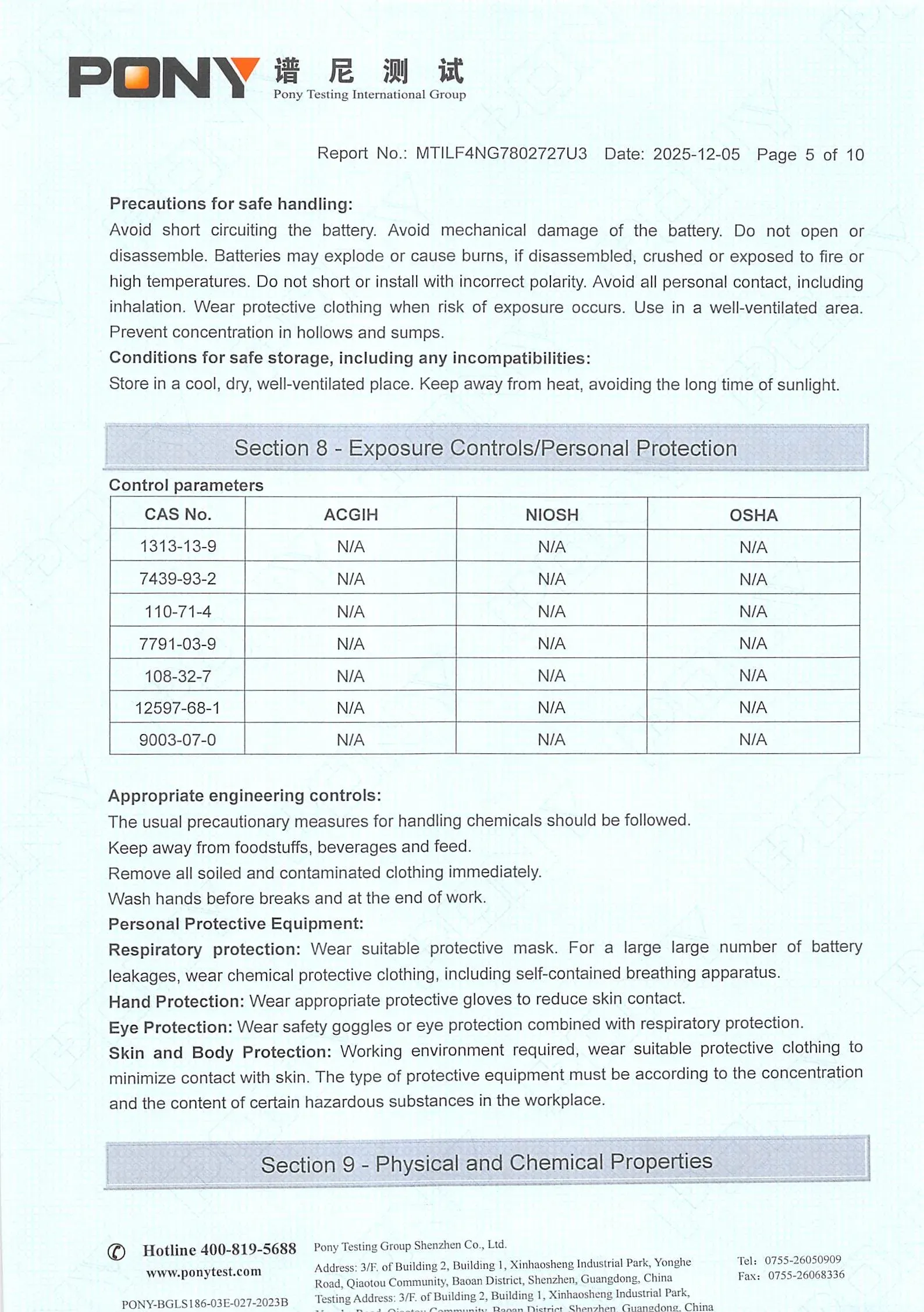
Avoid short-circuiting the battery and avoid mechanical damage. Do not open or disassemble: batteries may explode or cause burns if disassembled, crushed or exposed to fire or high temperatures. Do not short or install with incorrect polarity. Avoid all personal contact including inhalation, wear protective clothing when risk of exposure occurs, use in a well-ventilated area and prevent concentration in hollows and sumps. Store in a cool, dry, well-ventilated place, away from heat and out of long sunlight.
8. Exposure controls and personal protection
Control parameters: ACGIH, NIOSH and OSHA values are not applicable for every constituent CAS number on this sheet. Follow the usual precautionary measures for handling chemicals, keep away from foodstuffs, beverages and feed, remove soiled clothing immediately and wash hands before breaks and at the end of work.
Personal protective equipment: wear a suitable protective mask, and for a large number of battery leakages wear chemical protective clothing including self-contained breathing apparatus. Wear appropriate protective gloves and safety goggles. Wear suitable protective clothing to minimise skin contact; the type of equipment must match the concentration and content of the hazardous substances in the workplace.
9. Physical and chemical properties
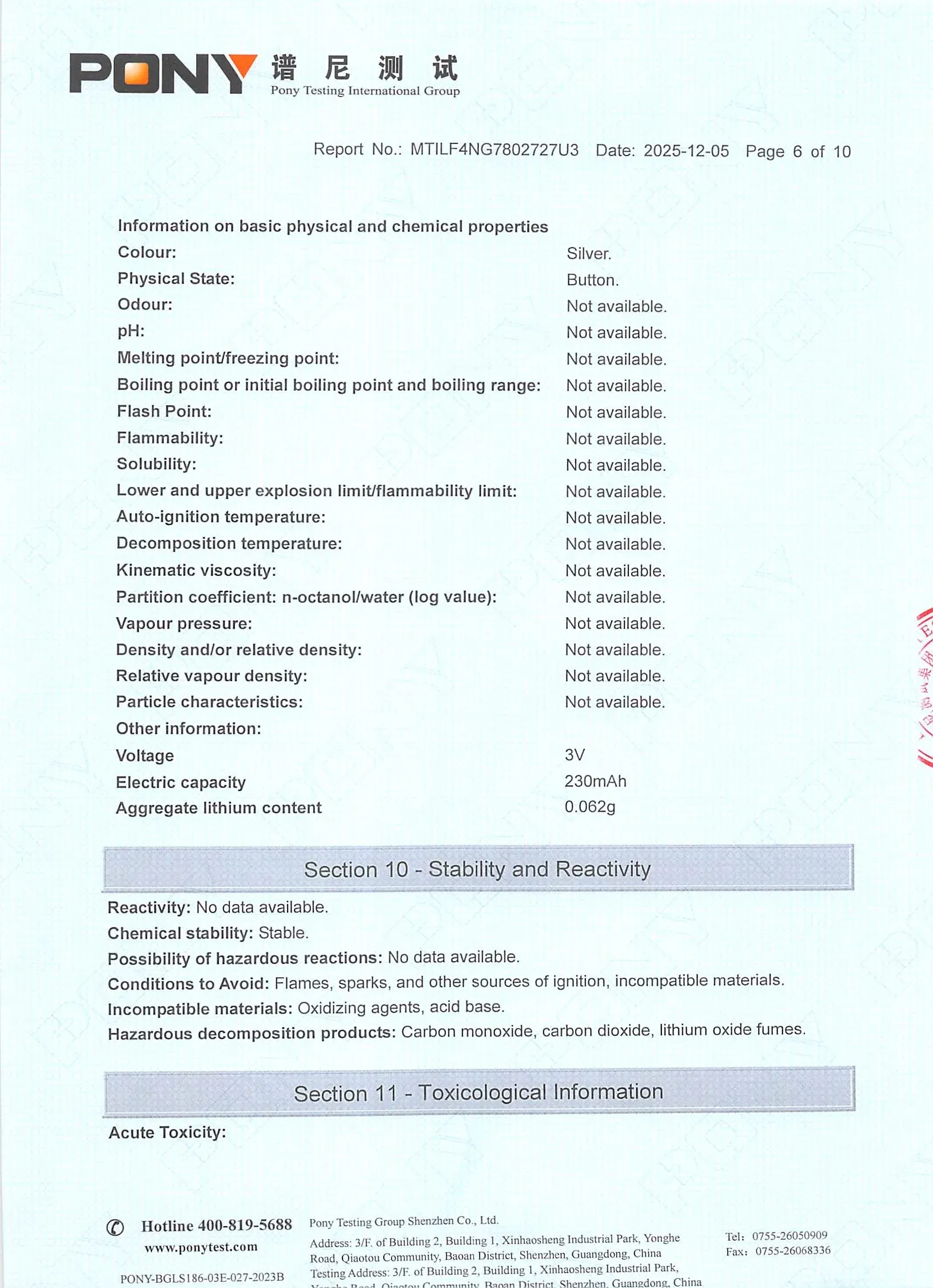
Colour: silver. Physical state: button. Odour: not available. pH, melting point, boiling point, flash point, flammability, solubility, explosion limits, auto-ignition temperature, decomposition temperature, viscosity, partition coefficient, vapour pressure, density, relative vapour density and particle characteristics: not available.
Other information: voltage 3 V, electric capacity 230 mAh, aggregate lithium content 0.062 g.
10. Stability and reactivity
Chemical stability: stable. Conditions to avoid: flames, sparks and other sources of ignition, incompatible materials. Incompatible materials: oxidising agents, acid, base. Hazardous decomposition products: carbon monoxide, carbon dioxide, lithium oxide fumes.
11. Toxicological information
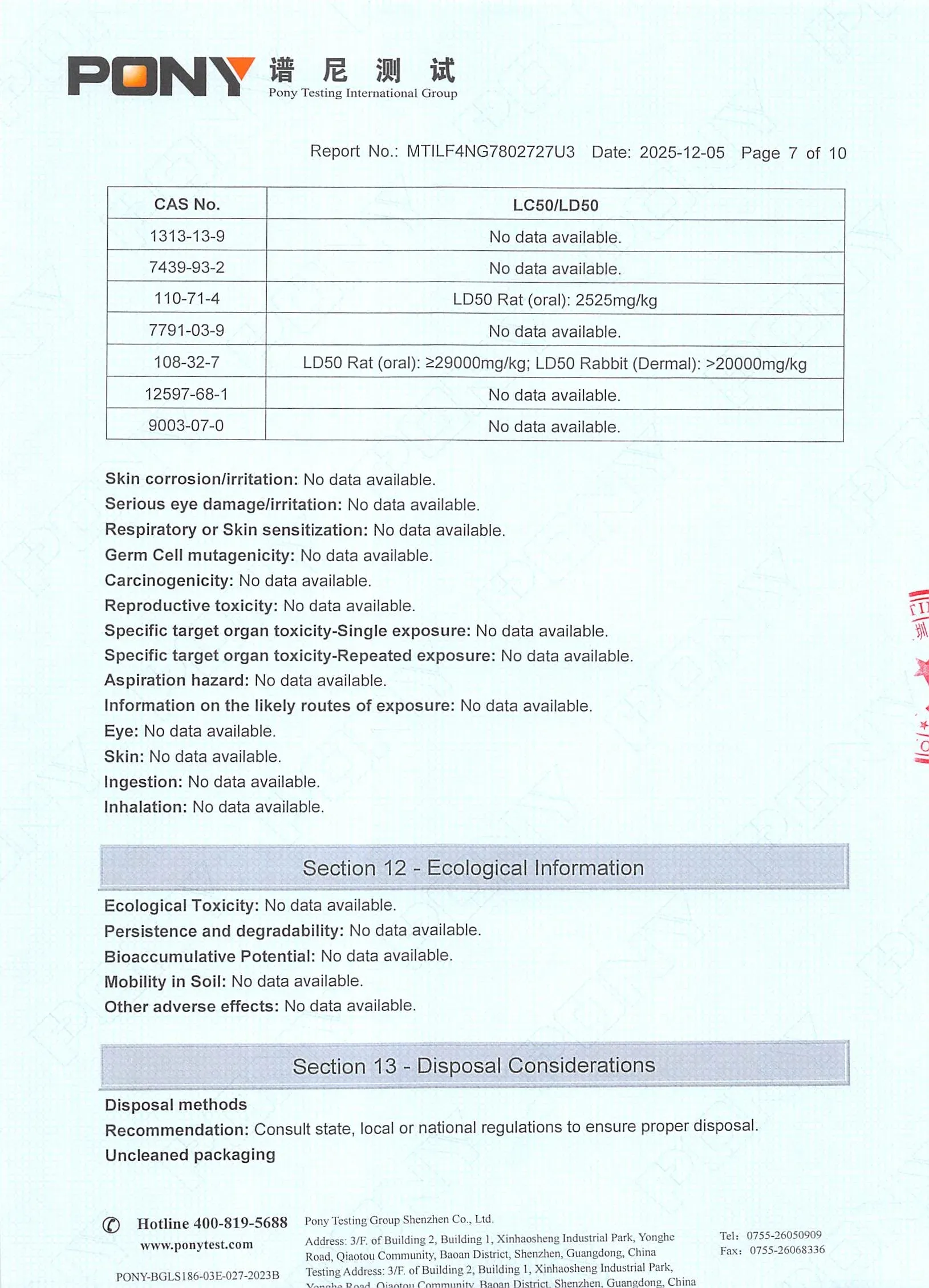
Acute toxicity: ethylene glycol dimethyl ether LD50 rat (oral) 2525 mg/kg; 1,2-propanediolcyclic carbonate LD50 rat (oral) at or above 29000 mg/kg, LD50 rabbit (dermal) above 20000 mg/kg. No data available for the other constituents. Skin corrosion, eye damage, sensitisation, mutagenicity, carcinogenicity, reproductive toxicity, target organ toxicity, aspiration hazard and routes of exposure: no data available.
12. Ecological information
Ecological toxicity, persistence and degradability, bioaccumulative potential, mobility in soil and other adverse effects: no data available.
13. Disposal considerations
Disposal must be made according to official regulations. Consult state, local or national regulations to ensure proper disposal.
14. Transport information
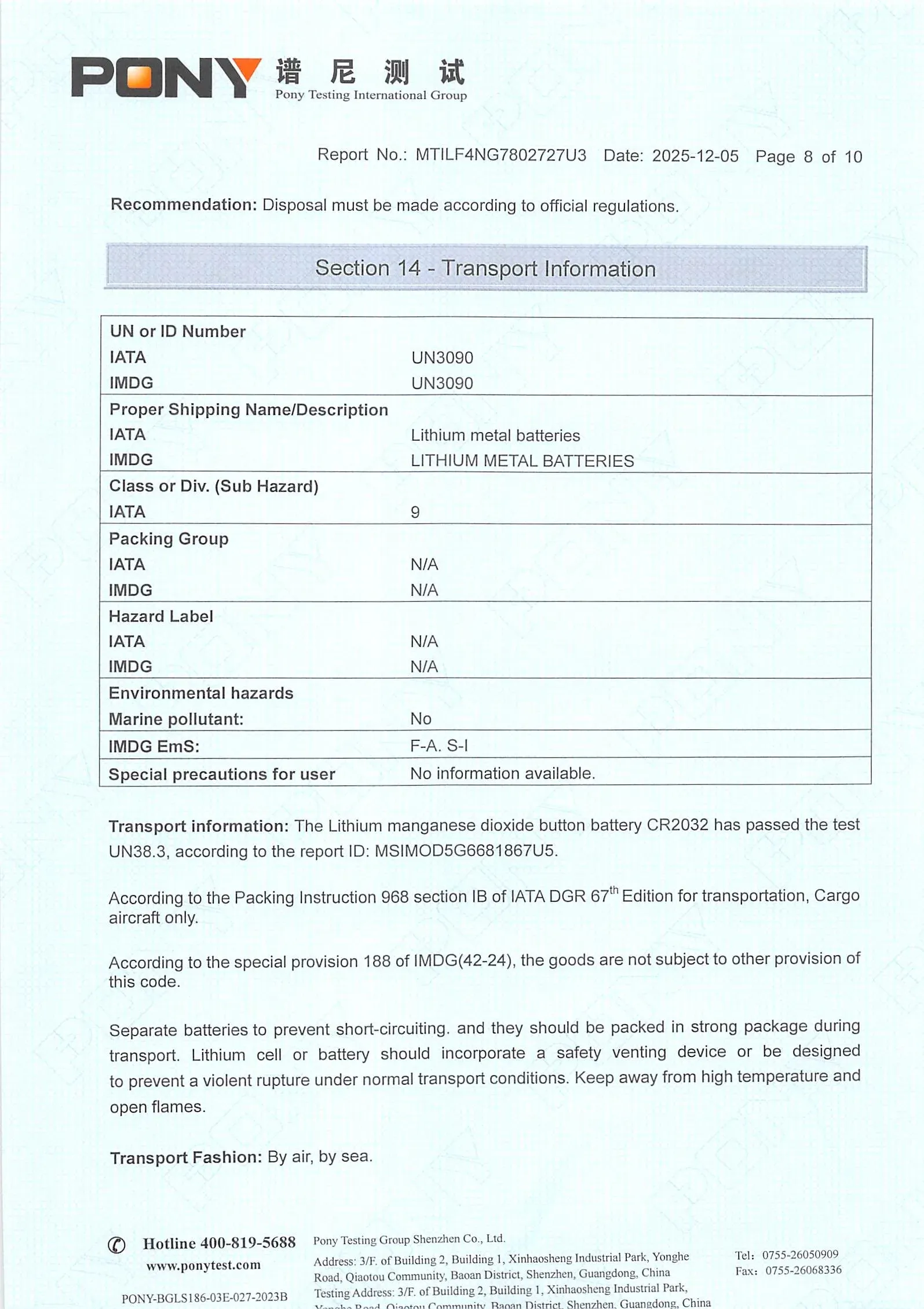
UN or ID number: UN3090 (IATA and IMDG). Proper shipping name: lithium metal batteries (IATA) / LITHIUM METAL BATTERIES (IMDG). Class or division: 9 for IATA. Packing group: not applicable. Hazard label: not applicable. Environmental hazards: marine pollutant — no. IMDG EmS: F-A, S-I.
The CR2032 cell has passed the UN38.3 test according to report ID MSIMOD5G6681867U5. According to Packing Instruction 968 section IB of the IATA Dangerous Goods Regulations 67th Edition the goods may be transported by cargo aircraft only. Under special provision 188 of IMDG (42-24) the goods are not subject to other provisions of that code.
Separate batteries to prevent short-circuiting and pack them in a strong package during transport. Lithium cells or batteries should incorporate a safety venting device or be designed to prevent violent rupture under normal transport conditions. Keep away from high temperature and open flames. Transport fashion: by air, by sea.
15. Regulatory information
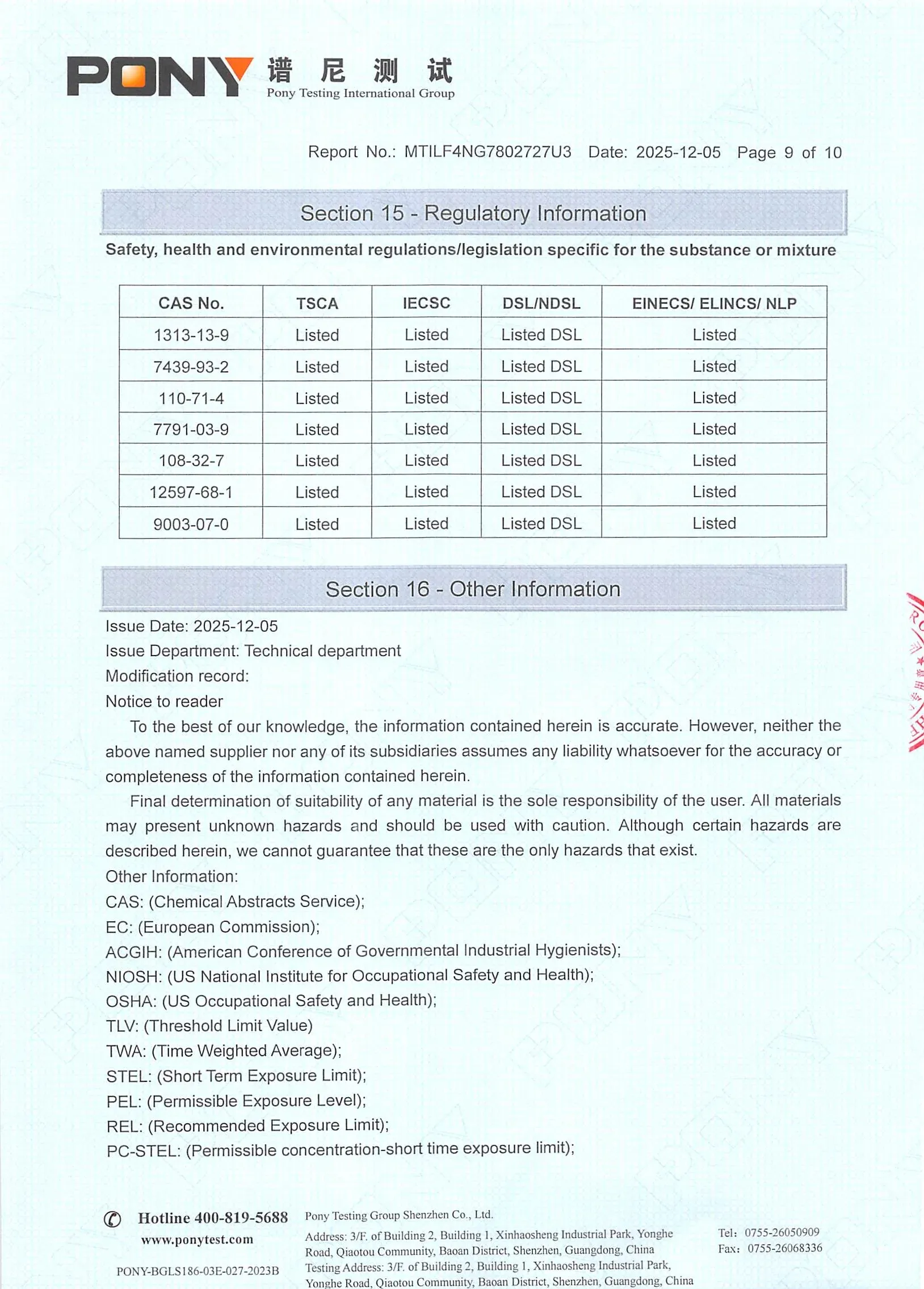
All seven constituent CAS numbers are listed on TSCA, IECSC, DSL/NDSL and EINECS/ELINCS/NLP inventories.
16. Other information
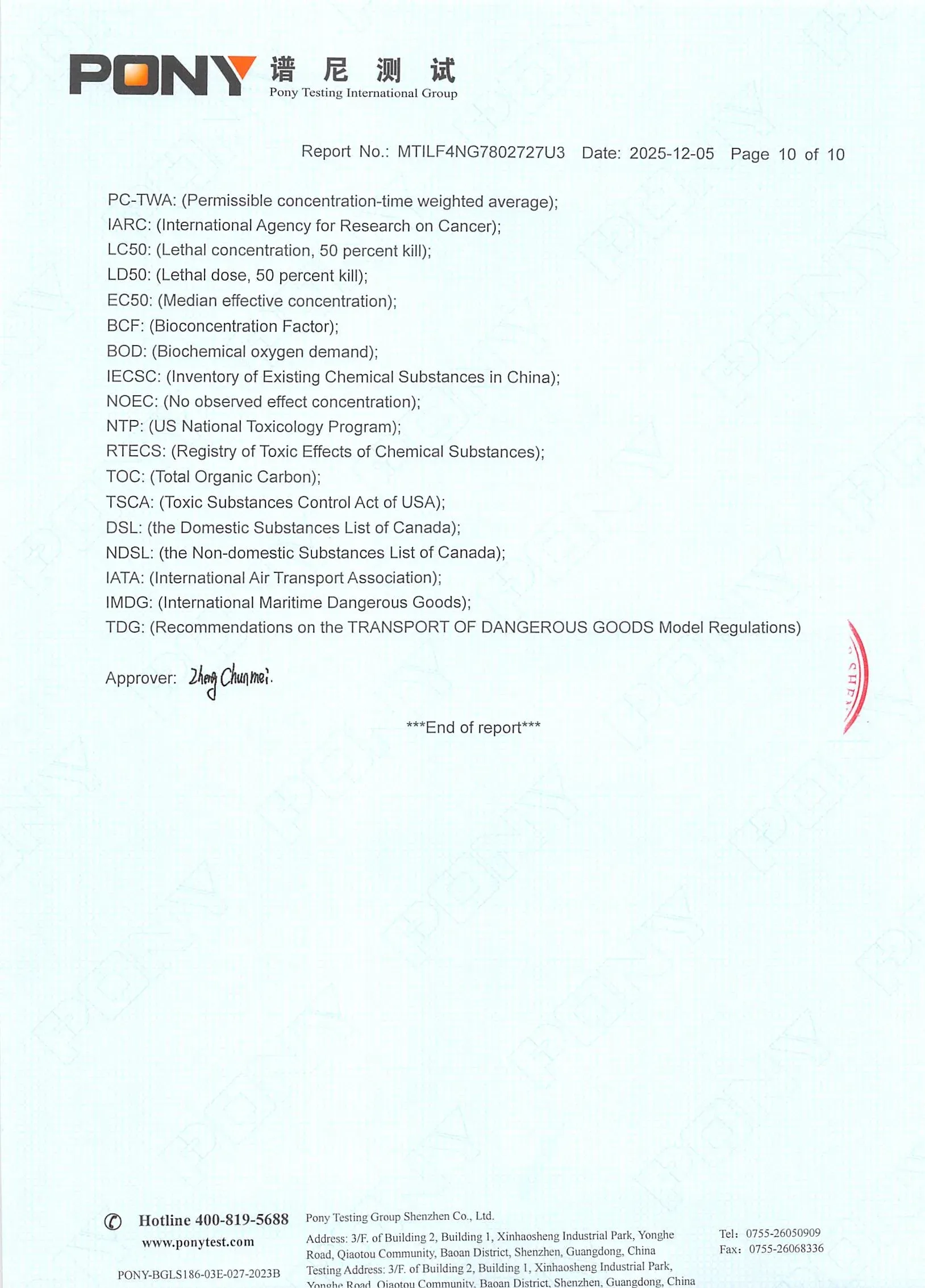
Issue date 2025-12-05, Technical Department. Notice to reader: to the best of our knowledge the information contained herein is accurate, but neither the supplier nor its subsidiaries assumes liability for its accuracy or completeness. Final determination of suitability of any material is the sole responsibility of the user.
Appendix: scanned report pages
The 12 scanned pages of the report as issued. Click any image to open it full size in a new tab.