Technology
How AB Microphone Arrays Separate Two Speakers in Face-to-Face Translation
A single microphone cannot tell which side of the desk is talking. A two-channel array positioned on opposite sides can — and that is what makes a dual-screen translator usable in a real conversation.
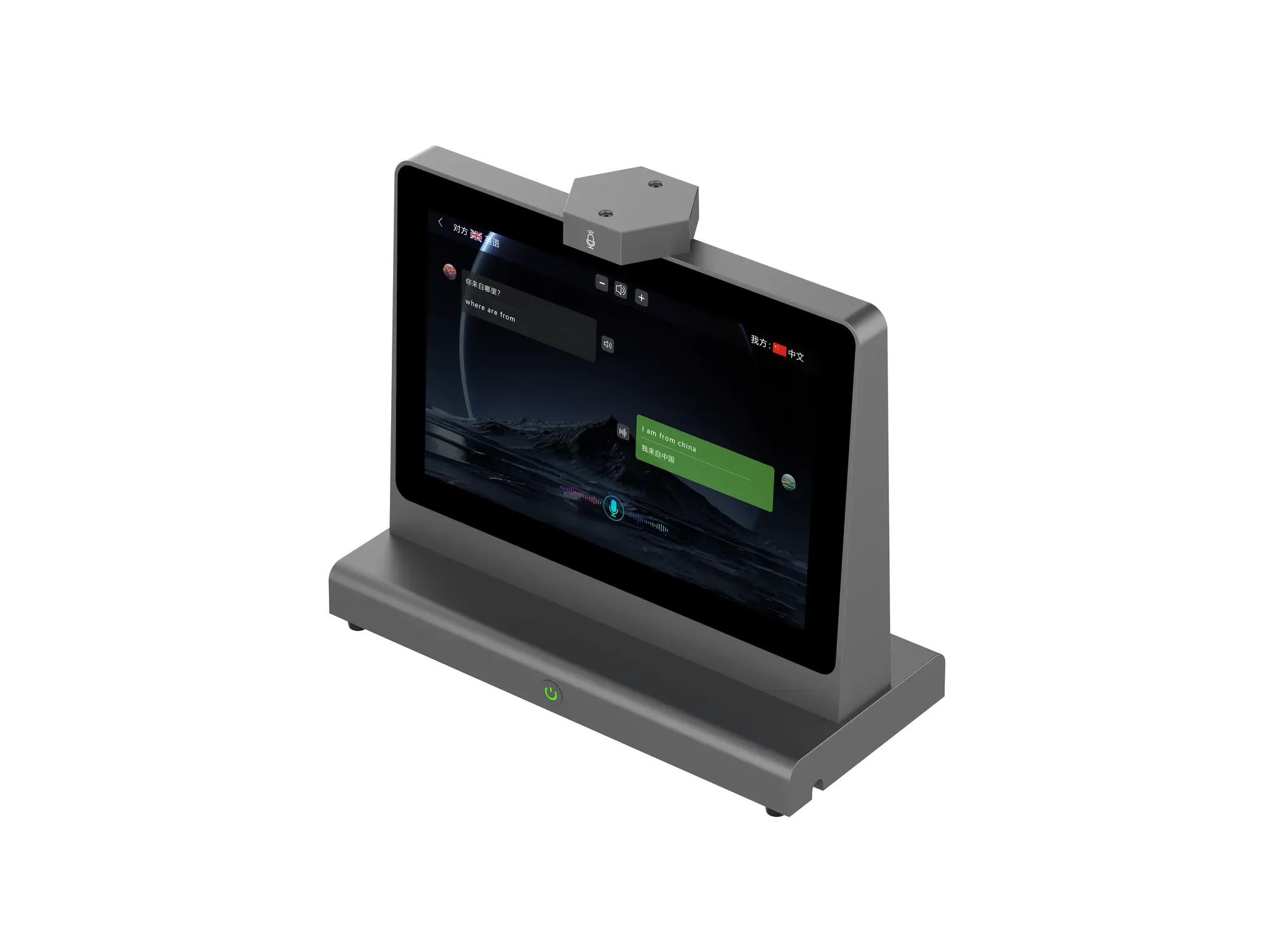
The hardest part of a two-person translation device is not translation. It is knowing who is speaking. If the device cannot tell which side of the counter the voice came from, it cannot decide which screen should receive the text — and the whole dual-screen premise collapses into a single shared display.
The problem a single microphone creates
Put one microphone in the middle of a desk conversation and it captures a mix: two voices, room noise, and the speaker grill of the device itself. Speech recognition can still produce text, but the device has no reliable signal telling it which participant just spoke, so both screens show the same thing and the staff member has to interpret.
This is the bottleneck the ZXTLCD team hit during development. In our own account of the project, we describe the limiting component as the pickup-noise microphone — the part that had to recognise a speaker's voice, translate continuously and stay efficient for long shifts. Rather than design around it, we developed our own array microphone for the translator.
How the AB array works
The ZXTLCD-AIS007 uses a two-channel, speaker-separated microphone array with an independent AB module. The microphones are positioned at different angles on each side of the device. The AB algorithm compares what each channel receives, identifies which side the voice is coming from, and routes that person's words to their own screen and speaker.
In practice this means the visitor speaks, the visitor's screen shows the staff member's language, and the reply is broadcast through the device's 2 × 8Ω 2W speakers toward the person who needs it. The separation is what keeps a single device usable by two people at once.
Why the physical layout matters as much as the algorithm
Microphone spacing and angle set the ceiling for any separation algorithm. Two capsules placed on the same face of a device will always struggle with symmetric room reflections; capsules at opposing angles give the algorithm a genuine difference in arrival time and level to work with. That is why the array is part of the industrial design, not a firmware setting.
What to test in a demo
When you evaluate any face-to-face translator, test the separation directly rather than the translation quality alone. Ask two people to speak alternately at normal volume from opposite sides, then both at once, then one person from an angle. Watch which screen receives the text each time.
Then test the environment you actually have: a lobby with background music, a station concourse with announcements, a service hall with a queue behind the visitor. Recognition accuracy in a quiet room tells you very little about a working counter.
The limits worth knowing
Speaker separation is not a substitute for turn-taking. Overlapping speech from two people at once remains difficult for any device, and a noisy concourse will always be harder than a quiet office. What the AB array buys you is reliable attribution in the normal case — one person speaking at a time from one side of the desk — which is how almost every counter conversation actually happens.